Navratri Living Room Decoration Ideas 2026: Cushions, Wall Art & Festive Styling
The living room is usually the first space that needs to feel festive, and the easiest one to change without touching furniture. Between hosting, garba nights and everyday family time during the nine days, most homes don't have the time for a full redecoration, and most don't need one. A few deliberate changes to the sofa, one strong wall focal point, and a layer of texture do more for the mood of a room than rearranging everything in it.
How to Decorate Your Living Room for Navratri 2026
A living room reads as festive when it has a clear focal point, a coordinated colour story, and a bit of textile layering, not when every surface is decorated. Before buying anything, look at your room and identify three things: which wall gets the most attention when someone walks in, how many cushions your sofa currently holds, and whether you have a spare corner for floor seating if you're expecting guests or hosting garba practice. Everything below builds on those three answers.
1. Start With the Sofa: Use Cushions to Introduce Festive Colour
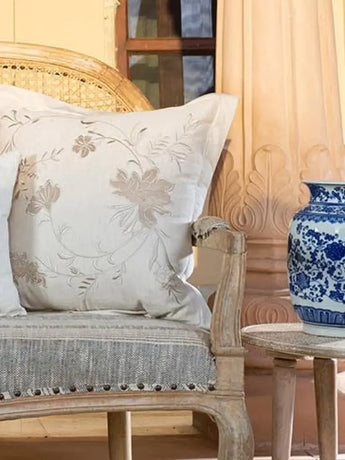
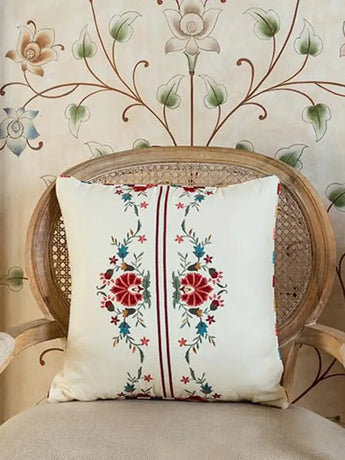
The sofa is the fastest, cheapest and most visible change you can make in a living room, which is why it should be the first thing you style. As a general rule, five to seven cushions across a three-seater reads as generous without looking crowded, and three to four works well on a two-seater or loveseat. Mix at least two sizes, usually 16 or 18 inch squares with one or two bolster or lumbar shapes, so the arrangement has some visual rhythm instead of a flat row of identical squares.
Texture matters as much as colour. A velvet cushion catches light differently from a cotton or silk one, and pairing a richly textured piece with a flatter woven cushion keeps the sofa from looking one-note. If you're working with a neutral sofa, one or two cushions in a deep jewel tone, like sapphire, ruby or emerald, will carry the festive mood on their own. Keep the rest of the arrangement in ivory, tan or charcoal so the accent colours have room to stand out.

Sultan Ruby Cushion
₹1,899
A ruby feather-touch velvet cushion with a hand-embroidered horse motif finished in light gold zari and copper accents. Works as the single strong accent on a neutral or ivory sofa.
View the design
Zarika Sapphire Cushion
₹1,899
Deep sapphire velvet with striped zari embroidery, a good pairing colour when the room's second accent leans warm, such as tan or copper.
View the design
Mayurlekha Cushion
₹2,699
A hand-drawn peacock design set among zari-embroidered vines. The multicolour base makes it a useful bridge cushion between two stronger accent tones.
View the designExplore the cushion collection
2. Create a Focal Point With Indian Wall Art
A living room can carry festive cushions and still feel unfinished if the walls are bare or cluttered with too many small frames. One strong piece of wall art, hung above the sofa or on the wall opposite the main seating, does more work than several smaller ones. As a rule of thumb, the artwork should span roughly two-thirds the width of the sofa or console beneath it, and the centre of the piece should sit at eye level for someone standing, generally 60 to 65 inches from the floor to the centre of the frame.
Indian wall art, whether a devotional piece, a Kalamkari panel or a scene from mythology, works well in both traditional and contemporary living rooms because the craft itself carries the visual weight. In a room with plain walls and simple furniture, a single detailed piece becomes the room's story without needing additional decor around it.

Shrinathji Wall Art
₹17,900
A 27 x 21 inch handcrafted piece in the Nathdwara Pichwai tradition, worked in gold zari, beadwork and crystals on black velvet, set in an antique gold frame. Suits a puja corner, entryway or living room wall.
View the design
Krishna Leela Black and White Wall Art
₹123,900
A large 35 x 48 inch hand-painted and hand-embroidered Kalamkari panel in black and white, suited to a contemporary living room that wants one dramatic statement piece rather than colour everywhere.
See the design
3. Layer Throws and Bolsters for a More Festive Look
Once the sofa and the wall are done, a throw or bolster adds the last layer of texture that makes a room feel finished rather than staged. A throw draped over one arm of the sofa, folded in thirds so the pattern or texture shows, works better than laying it flat across the back. On an accent chair, the same throw folded over one arm reads as intentional rather than an afterthought.
If you're setting up floor seating for garba practice or a puja corner, bolsters do double duty. They support backs during long seated sessions and they let you add colour and texture at floor level, where cushions alone can look sparse against a bare rug.

Ferdaus Bahaar Beige Throw
₹12,900
A 50 x 70 inch premium silk throw in beige with hand-woven detailing, useful as a neutral layer that lets stronger accent cushions stand out rather than compete.
View the throw
Faiza Bolster Cushion
₹3,699
A 25 x 6 inch scarlet velvet bolster with oversized, Kashida-inspired floral embroidery. Works along a wall for floor seating or as extra back support on a sofa corner.
Explore bolsters
4. Navratri Colour Ideas for Your Living Room
Navratri's nine daily colours are a useful reference point, but a living room doesn't need to change colour every day to feel festive. A simpler approach is to pick one dominant colour for the season, such as ruby, sapphire or forest green, one supporting neutral like ivory or tan to keep the room from feeling heavy, and one metallic accent, usually gold zari work, to tie the pieces together. Within that structure, you can still nod to the day's colour by swapping a single cushion cover rather than restyling the whole room.
For a full breakdown of what each of the nine days represents and how to style around it, MiRooh's Guide to the 9 colours of Navratri 2026 covers the day-by-day palette in detail.
5. Traditional Navratri Living Room Styling
A traditional approach leans into richer textiles, visible embroidery and warmer tones. Velvet cushions with zari work, a jacquard-and-velvet set with a figurative motif, or a devotional wall art piece all read as traditional without needing additional props like diyas or torans to establish the mood, though those are welcome additions if you're hosting.

Mughal Darbar Tan Cushion (Set of 3)
₹7,999
A jacquard-front, velvet-back set of three in tan, with embroidered figures from a Mughal court scene. A strong choice for a living room built around traditional, narrative textiles rather than solid accent colours.
Explore the collection
6. Modern Navratri Living Room Styling
A modern living room can still feel festive without much colour. The approach here is closer to two to four strong cushions instead of a full arrangement, one dominant colour rather than several, and a single statement wall art piece doing most of the visual work. A black-and-white or monochrome artwork, paired with two jewel-tone cushions and nothing else added to the walls or shelves, reads as considered rather than sparse.
7. Navratri Decoration Ideas for Small Living Rooms
In a smaller room, the same principles apply with tighter limits. A vertical wall art piece draws the eye up rather than across, which helps a compact wall feel less crowded than a wide horizontal piece would. Stick to three to four cushions rather than seven, since a smaller sofa filled with cushions leaves no room to actually sit. Choose one throw that can move between the sofa and a chair rather than buying separate pieces for each, and keep walkways between furniture clear, particularly if the room doubles as a space for guests during the festival.
8. How to Make Your Living Room Garba-Ready
If you're hosting garba practice or a small dandiya evening at home, the living room needs to flex between seating and open floor space. Start by clearing the centre of the room, pushing the sofa and any coffee table back against the walls rather than removing them entirely. Move breakable decor, including any wall art hung at a height guests could brush against while dancing, off the main walkway. Bolsters and floor cushions along the wall give people a place to sit between rounds without needing extra chairs. For evening sessions, layer in warm ambient lighting, such as string lights along a window frame or shelf, rather than relying on the room's main overhead light, which tends to feel flat once the dancing starts.
9. Navratri Hosting: Make the Living Room Ready for Guests
For daytime visits and kitty parties, the priorities shift slightly. The sofa should have enough cushions for the number of guests you're expecting, with one or two extra kept aside. If you're serving food or tea in the living room, a table runner or a set of coordinated napkins on the coffee table adds a finished touch without much effort.

Kanak Da Sitta Ivory Runner
₹2,699
A 14 x 72 inch premium cotton runner in ivory with a dual-tone motif, sized for a coffee table or a console being used for tea and snacks during hosting.
Shop the collection
10. A Simple Navratri Living Room Formula
+ 3 to 5 coordinated cushions
+ 1 throw or bolster
+ simple festive lighting
+ clear floor space
This combination covers colour, texture, focal point and function without requiring new furniture. Add or remove elements depending on whether the room is being used for quiet family evenings, hosting, or garba nights, but the formula itself doesn't need to change through the nine days.
FAQ
How can I decorate my living room for Navratri without changing furniture?
Focus on three changes: swap in festive cushions on the existing sofa, add one wall art piece as a focal point, and layer a throw or bolster for texture. These three changes shift the mood of a room significantly without requiring new furniture.
What are the best colours for Navratri home decor?
There's no single required colour. A common approach is one dominant festive colour such as ruby, sapphire or forest green, paired with a neutral like ivory or tan and a gold metallic accent. This keeps the room coordinated even if you rotate a single cushion to match each day's colour.
How can I decorate a sofa for Navratri?
Use five to seven cushions on a three-seater sofa, mixing at least two sizes and one bolster or lumbar shape. Keep the base tones neutral and let one or two jewel-toned cushions carry the festive accent.
What cushions work well for festive home decor?
Velvet cushions with zari embroidery or a jacquard-and-velvet set with a figurative motif both read as festive. Mixing a textured cushion with a flatter woven one keeps the arrangement from looking uniform.
How can I decorate a small living room for Navratri?
Use a vertical wall art piece rather than a wide horizontal one, limit cushions to three or four, and choose one throw that can be moved between the sofa and a chair. Keep walkways clear rather than adding extra decor pieces on the floor.
How can I make my home ready for a garba night?
Push the sofa and any tables back against the walls to clear the centre of the room, move fragile decor off the main walkway, and use bolsters or floor cushions along the wall for flexible seating. Add warm ambient lighting instead of relying on the main overhead light.
What wall decor works for Navratri?
One strong piece, whether devotional, mythological or a large Kalamkari panel, works better than several small frames. Size it to roughly two-thirds the width of the furniture beneath it and hang it so its centre sits at standing eye level.
How can I style bolsters for Navratri?
Bolsters work best along a wall for floor seating, whether for a puja corner or garba-night seating, and as extra back support at the ends of a sofa. A single richly embroidered bolster can anchor a floor-seating arrangement the way an accent cushion anchors a sofa.