What Is Quiet Luxury in Indian Home Decor? And How to Achieve It With Cushions
Quiet luxury is a room that looks expensive without announcing it. No logos, no statement pieces fighting for attention, no obvious effort visible anywhere. Just quality fabric, considered proportion, and the kind of calm that makes people slow down when they enter.
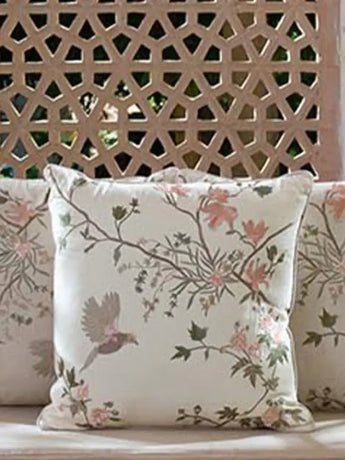
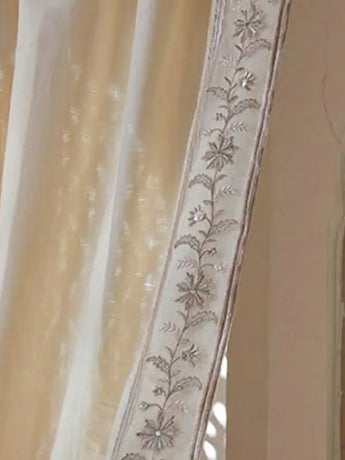
The term has been circulating in fashion since 2023 but the idea itself is centuries old in Indian design. The finest havelis and diwans never shouted. They whispered. Handcrafted embroidery on muted fabric, silk with a natural sheen rather than a synthetic gloss, botanical motifs rendered with restraint rather than abundance. This is where quiet luxury and Indian craft heritage are the same thing.
For a modern Indian living room, cushions are the fastest and most reversible way to achieve quiet luxury. Here is what that actually means in practice.
What Quiet Luxury Actually Means for Indian Home Decor
Quiet luxury is not minimalism. A minimalist room removes things. A quiet luxury room keeps the warmth and richness but removes the noise. The difference is significant for Indian homes, which carry a natural inclination toward texture, colour, and layering that minimalism often strips away.
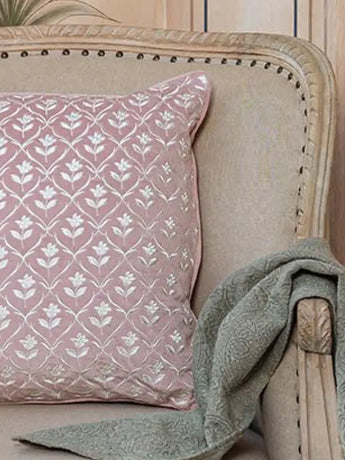
In cushion terms, quiet luxury means three things. First, a palette that earns attention by its restraint: ivory, warm cream, dusty rose, sage, muted gold, old stone. Second, a fabric with genuine depth: velvet pile, hand embroidery, natural silk sheen. Third, an arrangement that looks composed rather than assembled, where every piece has a clear role and nothing is competing for the same attention.
What it explicitly is not: bold primary colours on a neutral sofa, printed polyester covers in a large pattern, or five cushions all carrying the same visual weight at the same volume.
The Fabrics That Carry Quiet Luxury
Pure Tussar Silk

Tussar silk is a wild silk with a warm natural sheen and a slightly textured surface that no synthetic fabric can replicate. It does not reflect light uniformly the way processed satin or polyester does. Instead, it catches light irregularly, which creates a quiet visual depth that reads as expensive from across the room without drawing deliberate attention to itself.
MiRooh's pure Tussar silk range includes Khara Smoke, Kosa Nobel, and Sal Desert Sand, each priced at Rs 2,250. Muted, warm, and immediately identifiable as something different from standard cushion fabric even to someone who cannot name why.
Shop: Shop Khara Smoke Rs 2,250 | Shop Kosa Nobel Rs 2,250 | Shop Sal Desert Sand Rs 2,250
Chikankari Embroidery

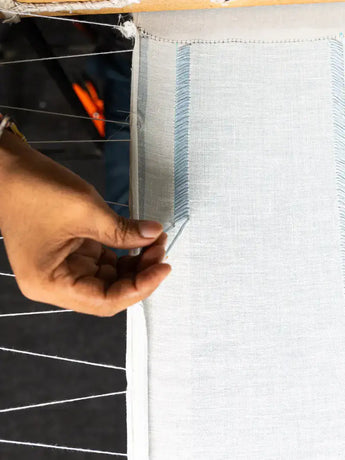
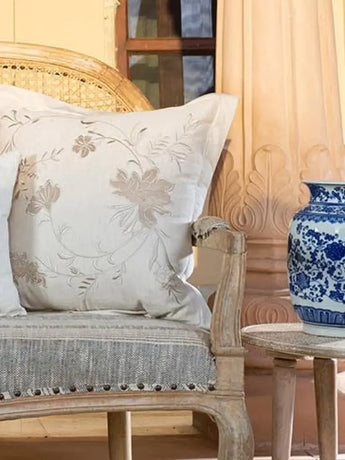
Chikankari from Lucknow is one of the oldest examples of quiet luxury in Indian craft. The embroidery is white on white or white on ivory, which means at a distance the cushion reads as plain. On close inspection it reveals dense, intricate needle work built from at least 32 distinct stitches. The person who knows fabric understands immediately what they are looking at. The person who does not still senses the quality without being able to explain it.
MiRooh's Shazi collection is built entirely on Chikankari. It is the most direct quiet luxury entry point in the entire collection because the embroidery carries all the craft depth and none of the visual noise.
Shop: Shop Shazi Chikankari Collection | Shop Baadamwari Kashmiri Collection
The Colour Palette of Quiet Luxury in Indian Homes
The quiet luxury palette works within a tight range of warm neutrals and muted jewel tones. Ivory, ecru, warm stone, dusty sage, old rose, and muted gold are the tones that carry a room in this direction. They are not cold: warm white rather than stark white, aged gold rather than bright gold, sage rather than emerald.
In an Indian home context, these tones layer naturally with the warm wood and terracotta that characterise Indian architecture and furniture. A warm ivory Shazi cushion against a dark teak sofa does not need any styling thought. It works automatically because both elements are warm-toned and neither is competing for attention.
Three tones maximum. One in warm ivory or cream as the base. One in a muted jewel or earth tone. One in natural silk or metallic embroidery. Keep the palette warm rather than cool. That is the entire palette formula for quiet luxury in an Indian living room.
How to Build a Quiet Luxury Cushion Arrangement

The arrangement for quiet luxury follows the same three-layer formula as any considered sofa, with one additional rule: every piece should look like it belongs rather than like it was placed.
Start with two Shazi Chikankari or Baadamwari cushions at the back. Both carry dense embroidery in muted tones that anchor the arrangement without drawing immediate visual attention. Add one pure Tussar silk cushion in the middle, in Khara Smoke or Sal Desert Sand, which introduces fabric variation and a quiet natural sheen. Finish with a single Tehni Pearl or Afreen Ivory cushion or bolster at the front, which closes the arrangement with a soft neutral that returns the eye to the sofa rather than away from it.
The result is a sofa that looks considered from every distance. On close inspection it reveals handcrafted detail that sustains the luxury reading. This is quiet luxury: earned at the thread level, not at the styling level.
Shop: Shop Tehni Pearl Rs 4,199 | Shop Afreen Ivory Rs 2,299 | Shop All Cushions
What to Avoid in a Quiet Luxury Room
Avoid anything that announces itself. A cushion with a visible brand logo, a large-scale bright printed pattern, or a novelty shape immediately breaks the quiet luxury reading because it asks for attention directly rather than earning it gradually.
Avoid mixing more than three tones. Quiet luxury depends on restraint, and four or five competing colours across a sofa arrangement is visual noise regardless of how good any single piece is.
Avoid synthetic fabrics as the primary material. Polyester does not catch light the way velvet or silk does, which means the entire fabric argument for quiet luxury collapses at the material level before the arrangement has a chance to work.
FAQ
What is quiet luxury in Indian home decor?
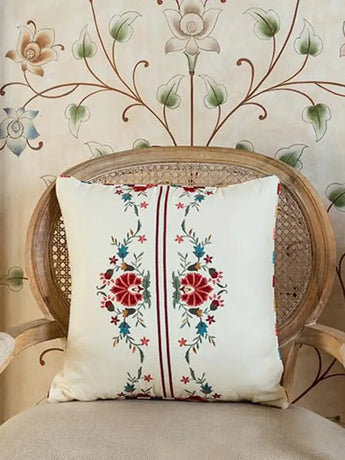
Quiet luxury in Indian home decor is a design approach that prioritises craft quality, muted tones, and genuine textile depth over obvious decoration or visible branding. It draws directly from India's own heritage of restraint in luxury: Chikankari white-on-white embroidery from Lucknow, Kashmiri botanical motifs on muted velvet, pure Tussar silk with its natural irregular sheen. The room looks expensive because of what it is made of, not because of how loudly it presents itself.
Which cushion collections at MiRooh are best for quiet luxury?
The Shazi Chikankari collection, the Baadamwari Kashmiri embroidery collection, and the pure Tussar silk range (Khara Smoke, Kosa Nobel, Sal Desert Sand) are the three strongest quiet luxury options. All three carry deep craft detail in muted palettes that read as considered rather than decorative.
What colours work for quiet luxury in an Indian living room?
Warm ivory, ecru, dusty sage, old rose, muted gold, and warm stone are the tones that carry quiet luxury in Indian homes. The palette should stay warm rather than cool. Three tones maximum across the full cushion arrangement.
Does quiet luxury work with a maximalist Indian living room?
Quiet luxury and maximalism are not incompatible in Indian design, but they require different application. In a room that already carries strong colour and pattern, quiet luxury lives in the quality of the fabric and the restraint of the cushion palette rather than the simplicity of the overall room. One or two Shazi or Tussar silk cushions in a richly decorated room carry the quiet luxury signal through contrast rather than coordination.
Quiet Luxury Starts With One Right Cushion
Handcrafted velvet, pure Tussar silk, Chikankari and Kashmiri embroidery. MiRooh's collections are built for rooms that speak softly and stay in the memory.
SHOP SHAZI | SHOP BAADAMWARI | SHOP ALL CUSHIONS