Chikankari Embroidery: The 400-Year-Old Lucknow Craft in Your Home
Some crafts survive centuries not because they were preserved in museums, but because they were too beautiful to let go. Chikankari is one of them.
For over 400 years, artisans of Lucknow have practised a form of hand embroidery so refined and rooted in skill that it has never gone out of style. Today, that craft is finding a new life in Indian homes, on cushions and textiles that carry its quiet elegance into everyday spaces.
What Is Chikankari?

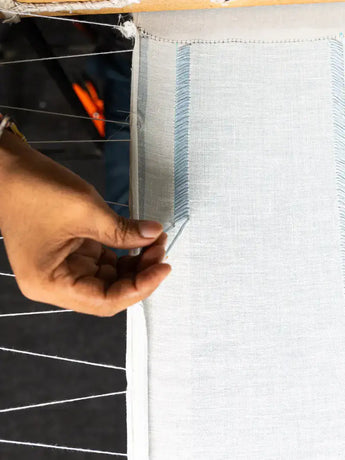
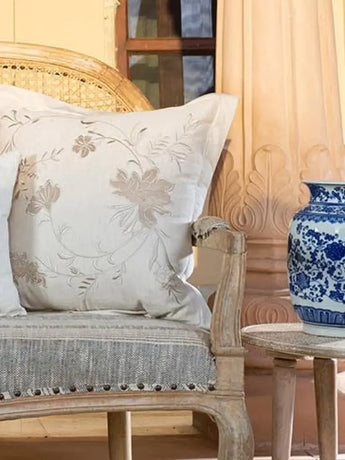
Chikankari is a style of hand embroidery originating from Lucknow, Uttar Pradesh. The word is believed to derive from the Persian word "chikan," meaning delicate needlework. What makes it distinct from other Indian embroidery traditions is its characteristic white-on-white technique, fine thread stitched onto fine fabric, creating patterns that reveal themselves only in shifting light.
The craft uses over 35 distinct stitches, each with its own name, purpose, and level of difficulty. Some stitches sit on the surface of the fabric and catch the light. Others work from underneath, creating a raised shadow effect known as shadow work. Together, they produce textiles that feel as light as air but carry the weight of centuries of skill.
A Craft With Royal Roots
Chikankari as we know it today is largely credited to Noor Jahan, the Mughal empress and wife of Emperor Jahangir, who is said to have introduced and refined the craft in the courts of Lucknow in the early 17th century. The Mughal court had a deep relationship with fine textiles, and Chikankari flourished under royal patronage, becoming the defining craft of Lucknow's cultural identity.
Over the following centuries it moved from royal wardrobes to the streets, practised in homes and small ateliers across old Lucknow. The craft survived colonial disruption and industrialisation because its beauty is irreplaceable by machine. No automated process can replicate the variation in stitch tension that makes each Chikankari piece uniquely human.
Craft Note
A single Chikankari piece can take several days to weeks to complete. The finest pieces are worked by artisans who have spent decades perfecting the most difficult stitches.
Chikankari in Your Home

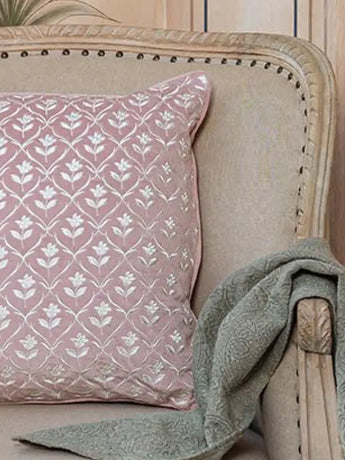
Chikankari has always been worn close to the body. But the same qualities that make it extraordinary on fabric make it remarkable in a home setting: the fine threadwork, the quiet texture, the way it shifts in natural light. A Chikankari cushion cover on a neutral sofa does something no solid-colour cushion ever can. It invites you to look closer. It rewards attention.
In home decor, Chikankari works best in rooms that value restraint. Minimalist interiors and soft neutral palettes are its natural habitat. It does not compete with bold colour or heavy pattern. It sits as the quietest, most confident piece in the room.
The Shazi Collection by MiRooh
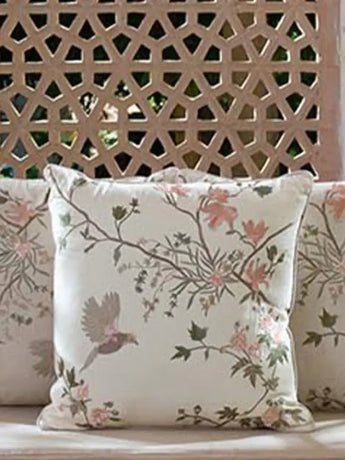
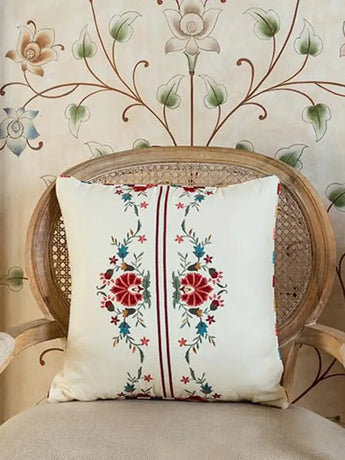
MiRooh's Shazi collection is a direct tribute to the Chikankari tradition. Each piece in the collection is inspired by the fine needlework heritage of Lucknow, bringing its delicate botanical motifs and characteristic white-on-neutral palette into handcrafted cushion covers designed for modern Indian homes.
The Shazi collection reflects MiRooh's commitment to reviving Indian craft traditions at risk of being lost to mass production. Every piece is made with the care Lucknow's artisans have invested in this craft for generations. When you bring a Shazi cushion home, you carry 400 years of skill into your living space.
Shop: Shop Shazi Collection (Chikankari) | Browse All Cushion Covers
How to Style Chikankari in Your Home
In the living room: Place two Shazi cushion covers on a neutral sofa alongside one bolder companion piece. Let the Chikankari be the most refined element in the grouping. Its subtle texture and fine embroidery will read as the anchor of the arrangement.
In the bedroom: A single Chikankari cushion at the centre of the headboard adds quiet sophistication. Pair it with plain companions in ivory or soft sage. Let the threadwork do all the talking.
As a gift: Chikankari carries cultural meaning and genuine craft value, making a Shazi cushion cover one of the most thoughtful home gifting choices available, a gift that earns a permanent place in a room.
Shop: Shop Shazi Collection | Browse Gifting Collection
FAQ
What is Chikankari embroidery and where does it come from?
Chikankari is a style of traditional hand embroidery from Lucknow, Uttar Pradesh, with over 400 years of history. It is known for its delicate white-on-white or white-on-neutral threadwork and uses over 35 distinct hand stitches, many of which cannot be replicated by machine.
How do you use Chikankari in home decor?
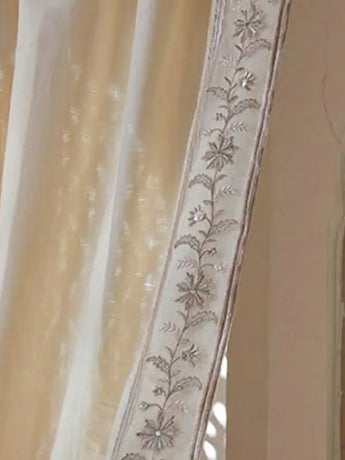
Chikankari works beautifully in home decor as cushion covers, bolster covers, and light curtain panels. It performs best in minimalist or neutral-palette interiors where the subtle texture and fine embroidery can be appreciated. MiRooh's Shazi collection is designed specifically for this purpose.
What makes Chikankari more expensive than regular embroidery?
Genuine Chikankari is entirely hand-stitched using 35 or more distinct stitches, many of which require years of training to master. A single piece can take days or weeks to complete. This level of skill and time investment means authentic Chikankari carries a value no machine-made textile can match.